Chemical and petrochemical plants measure flow to control ingredient ratios, reconcile material balances and track utilities. SmartMeasurement offers clamp-on ultrasonic meters for liquid lines where avoiding pipe penetration matters, electromagnetic meters for conductive liquids, Coriolis meters for direct mass flow and density, thermal meters for selected gases, and vortex meters for steam.
The illustrations on this page show representative meter locations on industrial equipment. Final selection depends on the fluid composition, flow range, pipe dimensions, pressure, temperature, material compatibility and any required approvals.
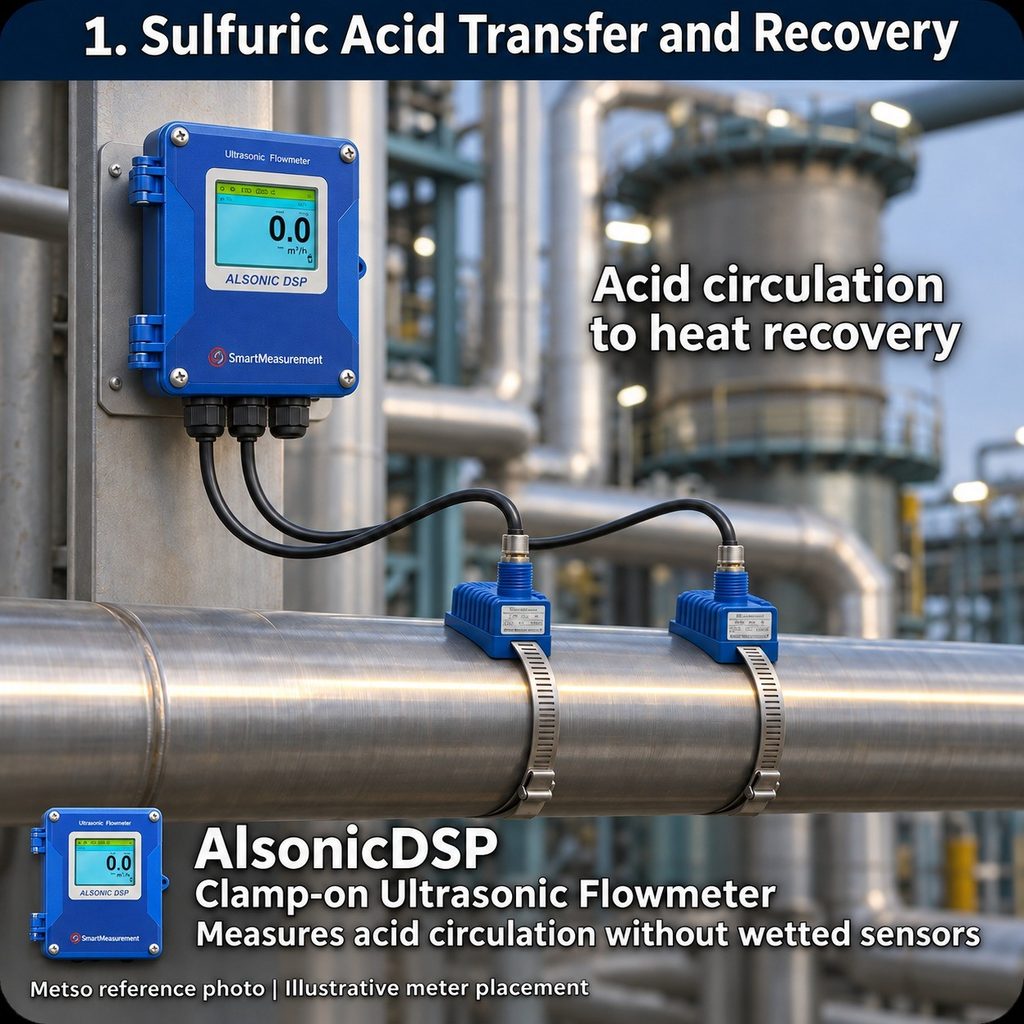
Sulfuric Acid Transfer and Recovery
ALSONIC-DSP clamp-on transducers measure acid circulation to evaporators or heat exchangers. Pipe and liner construction, acoustic transmission and surface temperature are reviewed when specifying the installation. Because the transducers stay outside the pipe, no wetted meter components are added to the acid line.
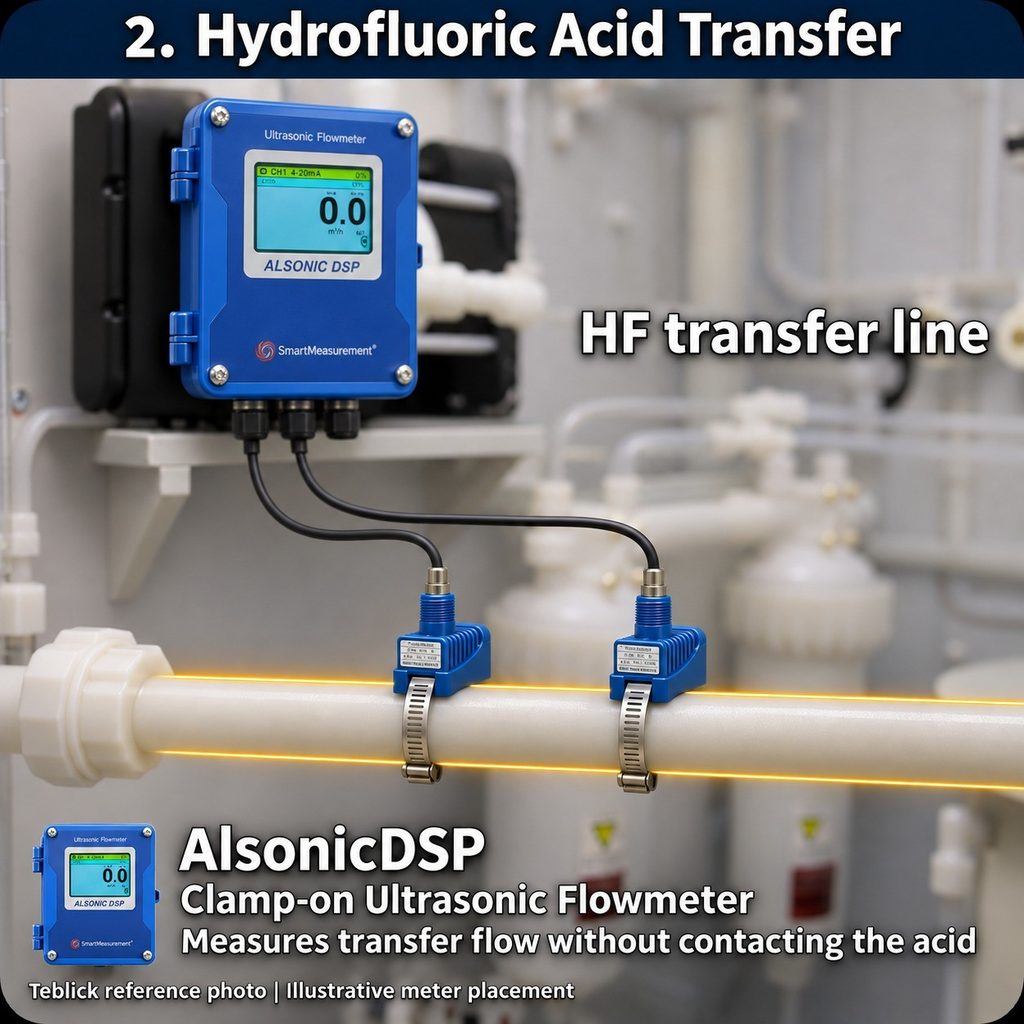
Hydrofluoric Acid Transfer
On a compatible full pipe, external ALSONIC-DSP transducers can track transfer volume without contacting the acid. Where an inline ALMAGWP is considered, the liner, electrodes, grounding components and seals are selected for the actual HF concentration and temperature, and each application is reviewed before materials are confirmed.
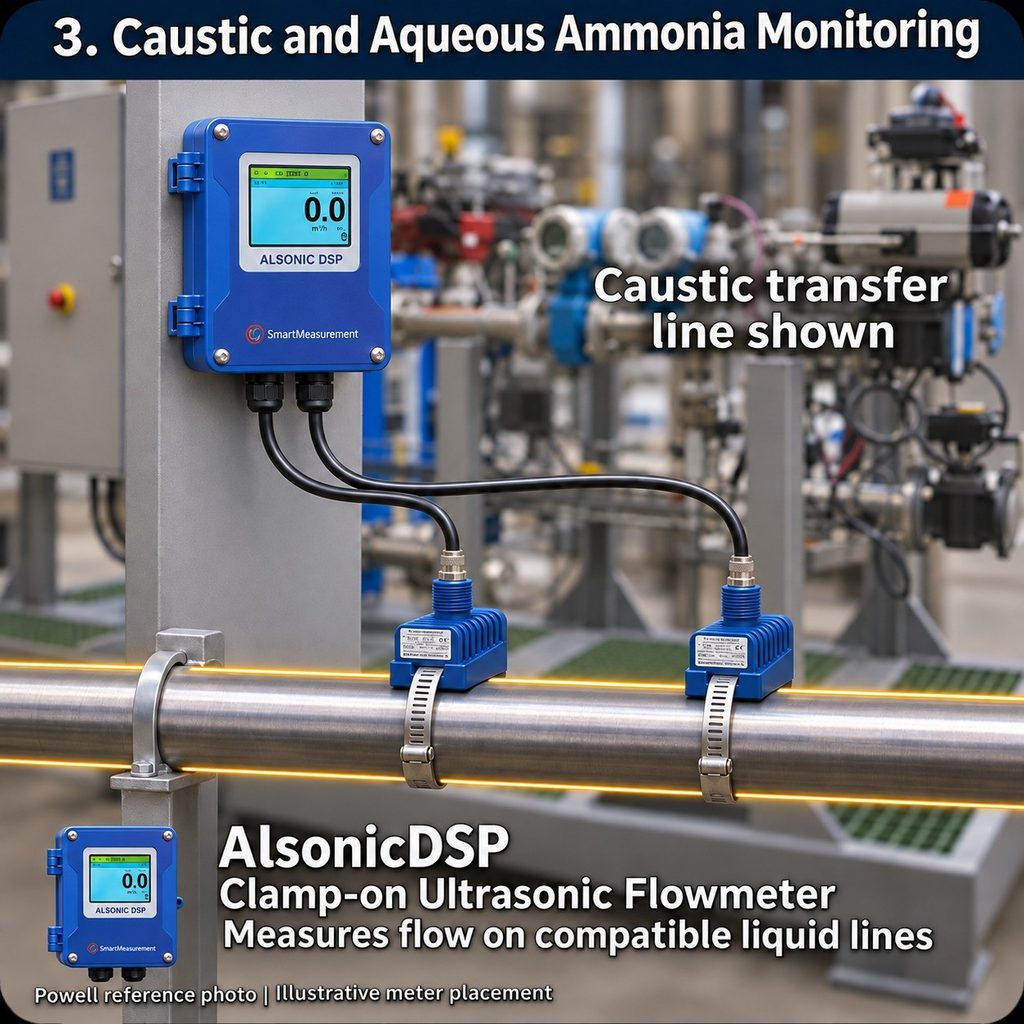
Caustic and Aqueous Ammonia Monitoring
ALSONIC-DSP measures flow on an acoustically suitable transfer line. Where the selected configuration provides sound velocity, a PLC can estimate concentration using a fluid-specific, temperature-compensated correlation validated against samples. Each chemical and composition range requires its own correlation data.
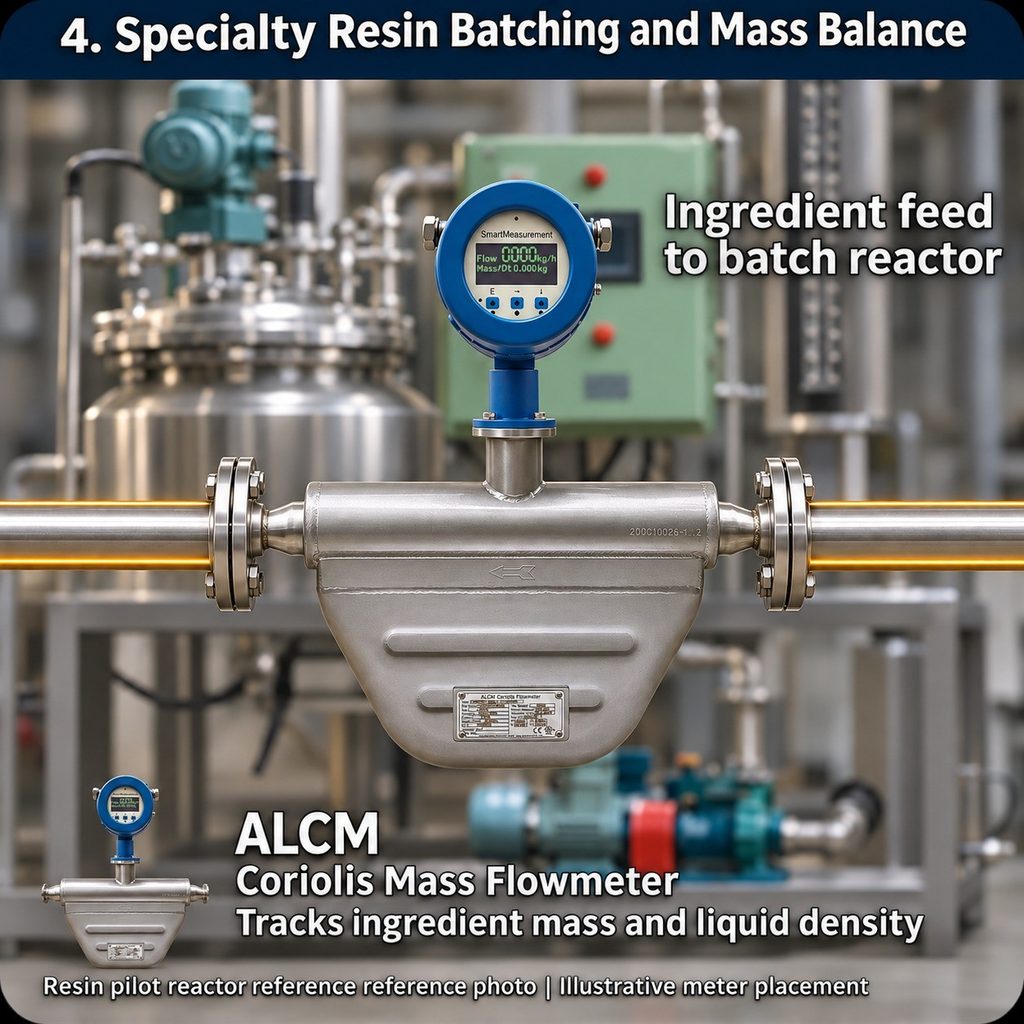
Specialty Resin Batching and Mass Balance
ALCM Coriolis meters installed on selected reactor feeds and finished-resin transfer lines totalize ingredient mass against the batch recipe, so feed and product totals can be reconciled over the same batch boundary. Density measured alongside mass flow helps flag process changes. Meters are sized for peak viscosity, minimum batch flow and acceptable pressure drop.
Reactor Recirculation and Blend Consistency
An ALCM on a representative liquid recirculation loop tracks density and flow as a batch mixes or reacts. Density trended with temperature can be compared with a validated batch profile. The loop must stay full, and gas entrainment or solids settling must not make the sample unrepresentative.
Solvent Recovery and Reuse
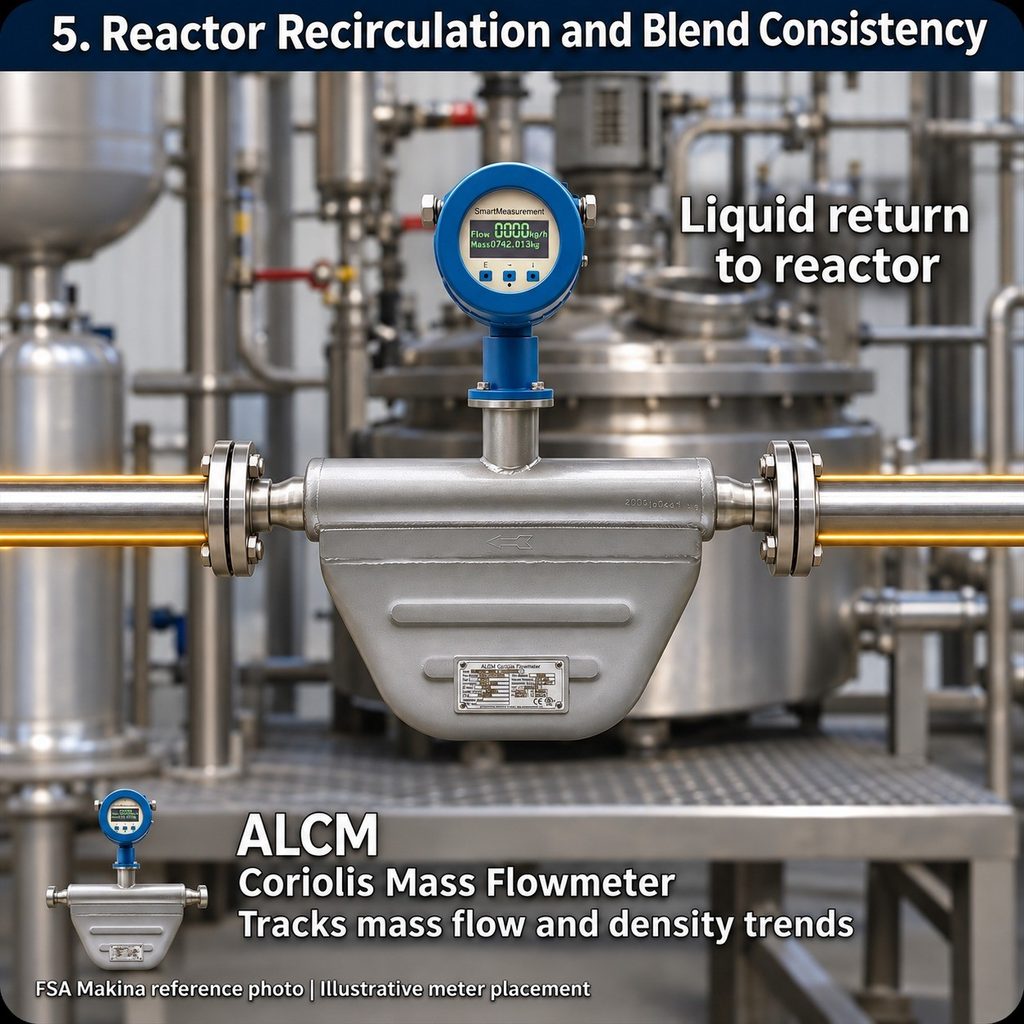
Condensed solvent is metered downstream of the condenser and receiver on a full liquid line before it returns to storage or reuse. ALCM measures recovered mass and tracks density changes. Where several solvent components or water can change together, separate composition testing is recommended. Flashing margin and area classification are considered during selection.
Ultrapure Water for Electronic Chemicals
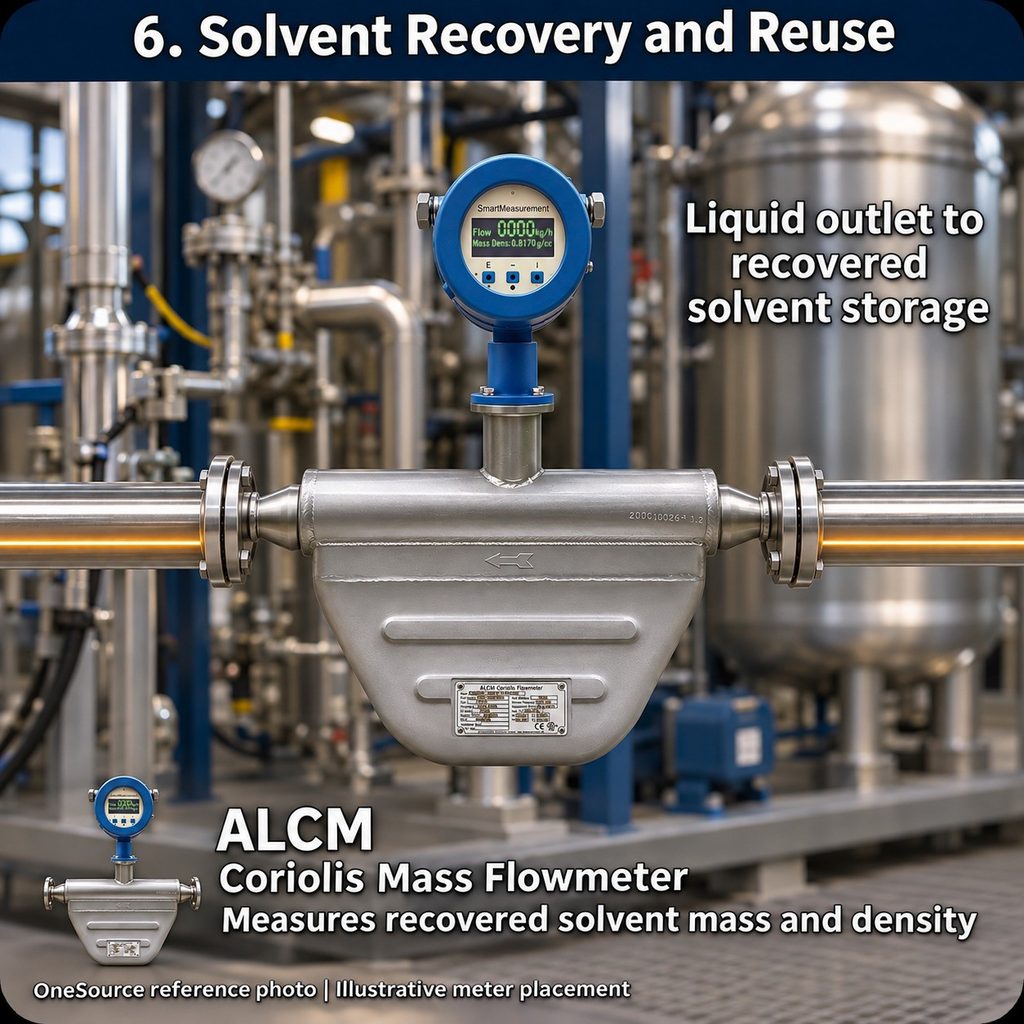
Clamp-on ultrasonic meters monitor flow on the supply and return of an ultrapure-water loop. On acoustically suitable pipe, ALSONIC-FX is an option for routine clean-water service and ALSONIC-DSP for applications needing a more capable measurement platform. Flow measurement is paired with the facility’s independent water-quality instruments.
Nitrogen Blanketing and Process Gas Distribution
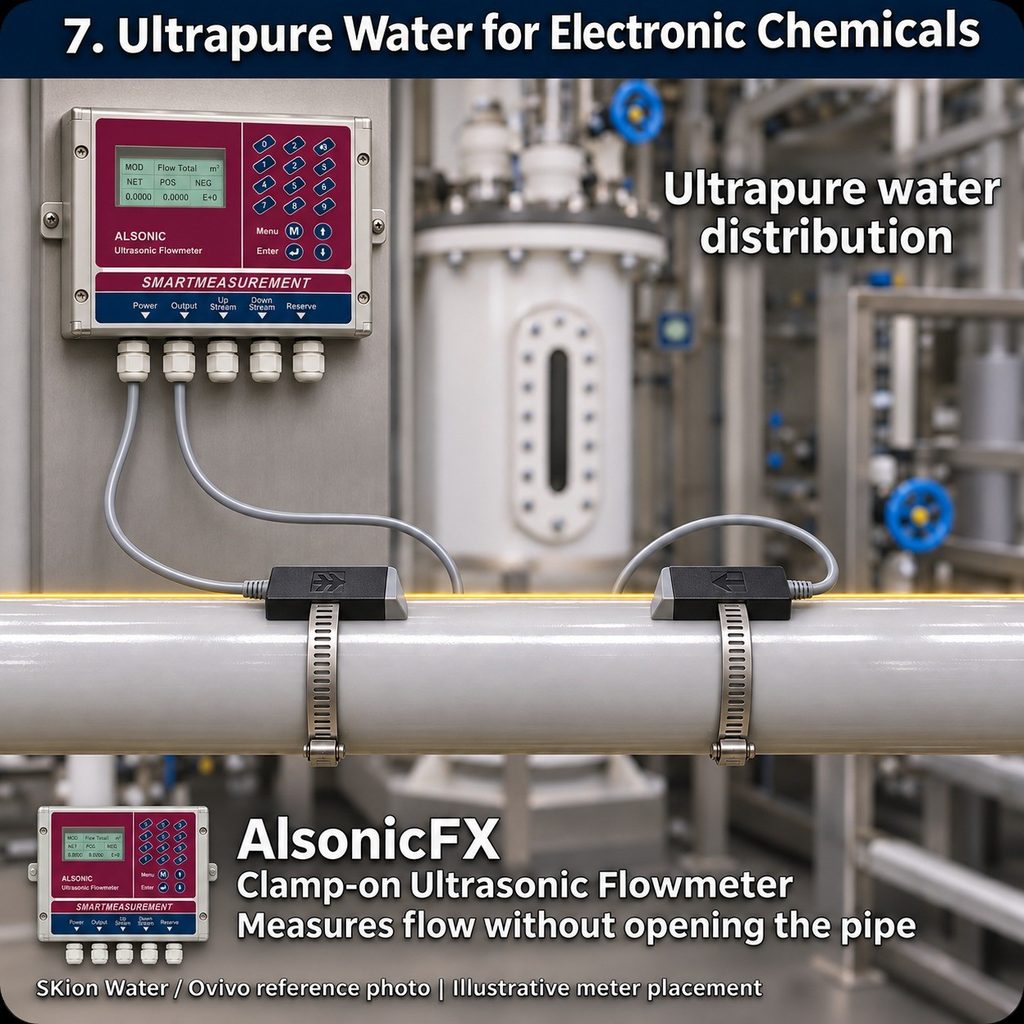
ATMF thermal mass flow meters calibrated for the specified gas are used on nitrogen headers and selected purge or blanketing branches. Usage can be compared by area, and low-flow consumption can be trended during idle periods. Where only proof of flow is needed, an ALTS flow switch is an economical alternative. Oxygen-service equipment is selected separately where applicable.
Fuel Gas and Steam Utilities
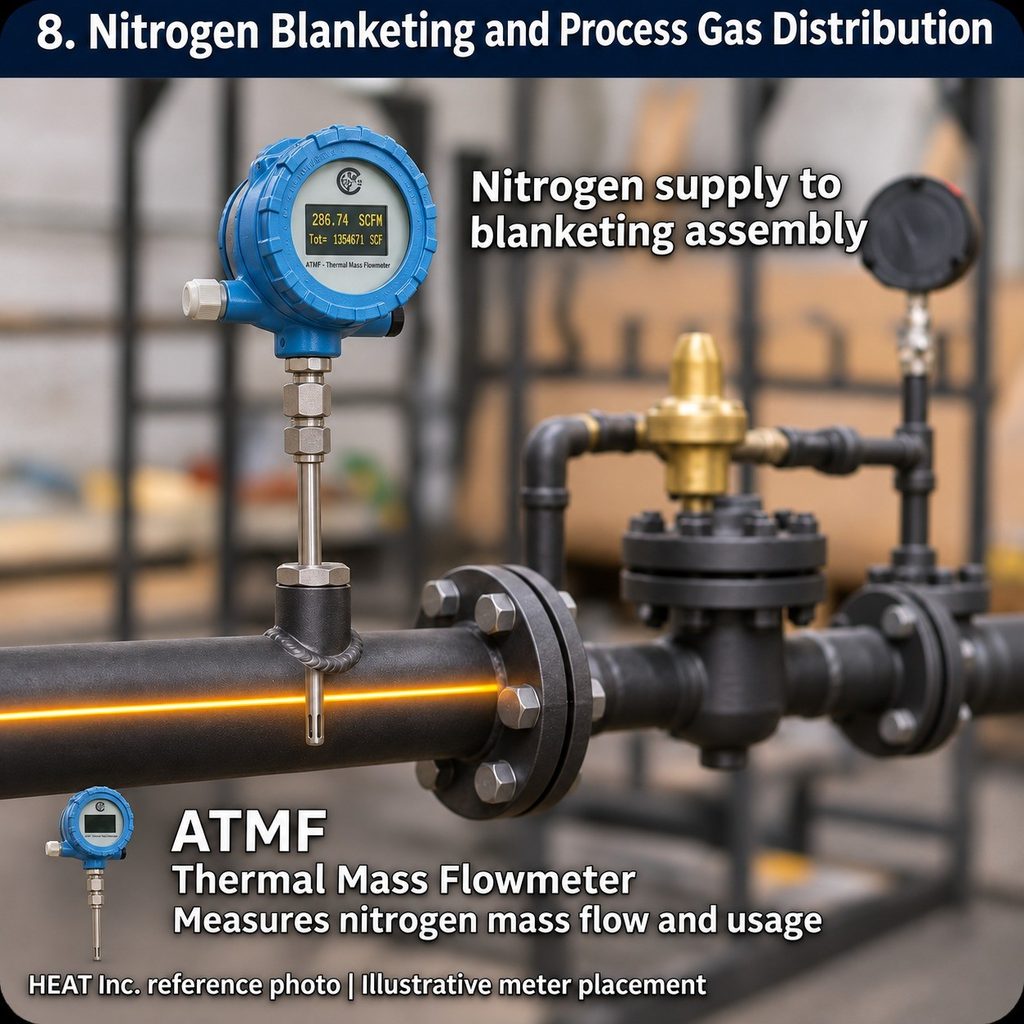
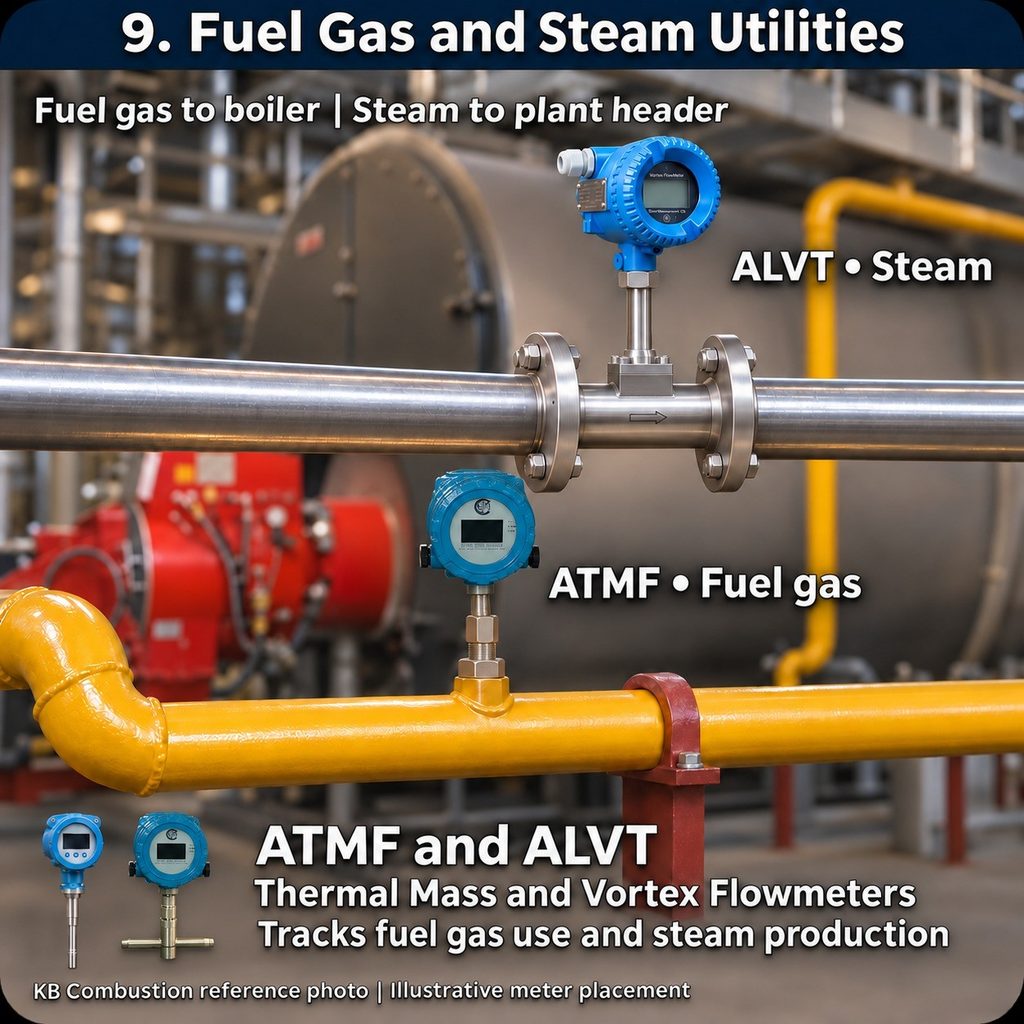
An ATMF on the conditioned fuel-gas branch to a boiler measures fuel gas where the gas composition and calibration are suitable. An ALVT vortex meter on the steam distribution line measures steam, with appropriate compensation for the steam condition. Trending the two streams compares fuel consumption and steam production over the same operating period.
Vent and Flare Gas Monitoring
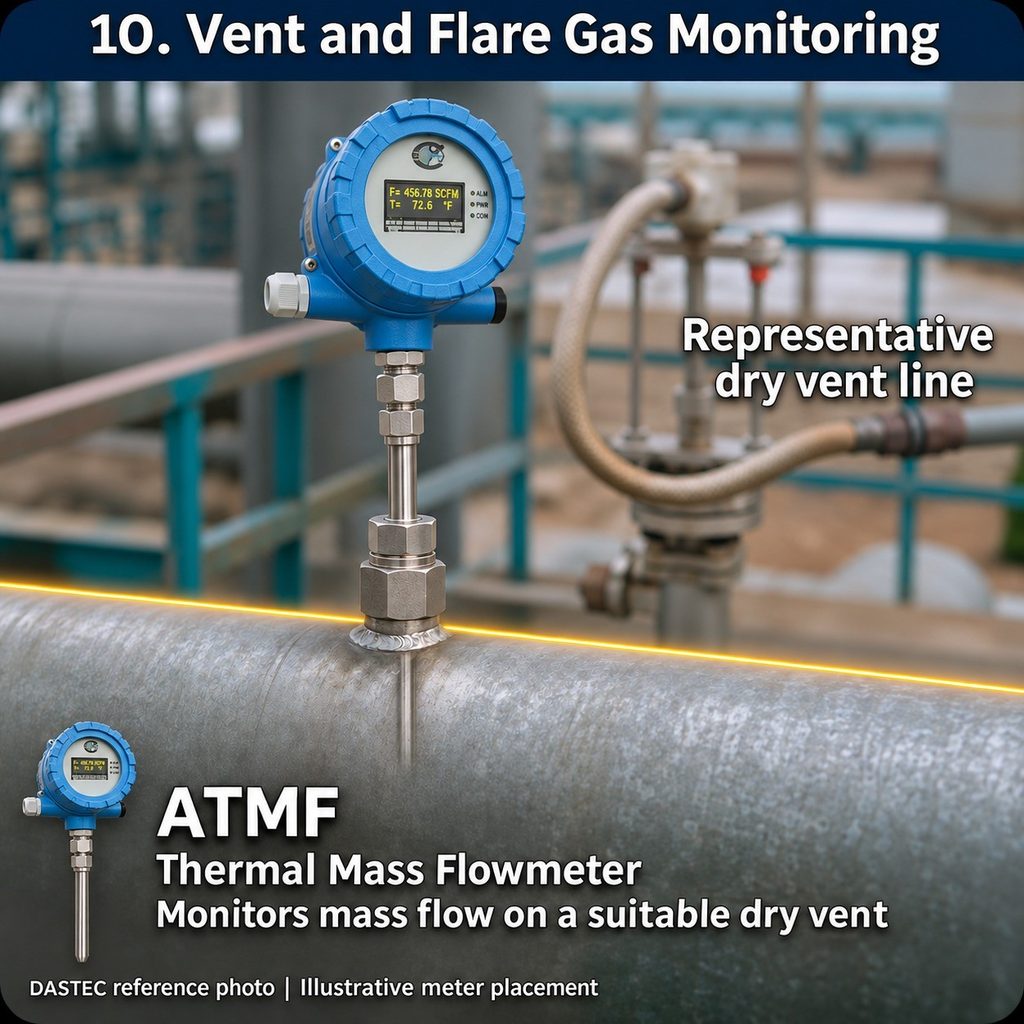
An ATMF may suit dry vents with sufficiently stable gas composition and a suitable flow range. For variable-composition or wet flare headers, the full operating envelope and the applicable monitoring requirements are reviewed before a technology is selected. Expected idle and peak flows are evaluated separately.
Effluent Neutralization and Final Discharge
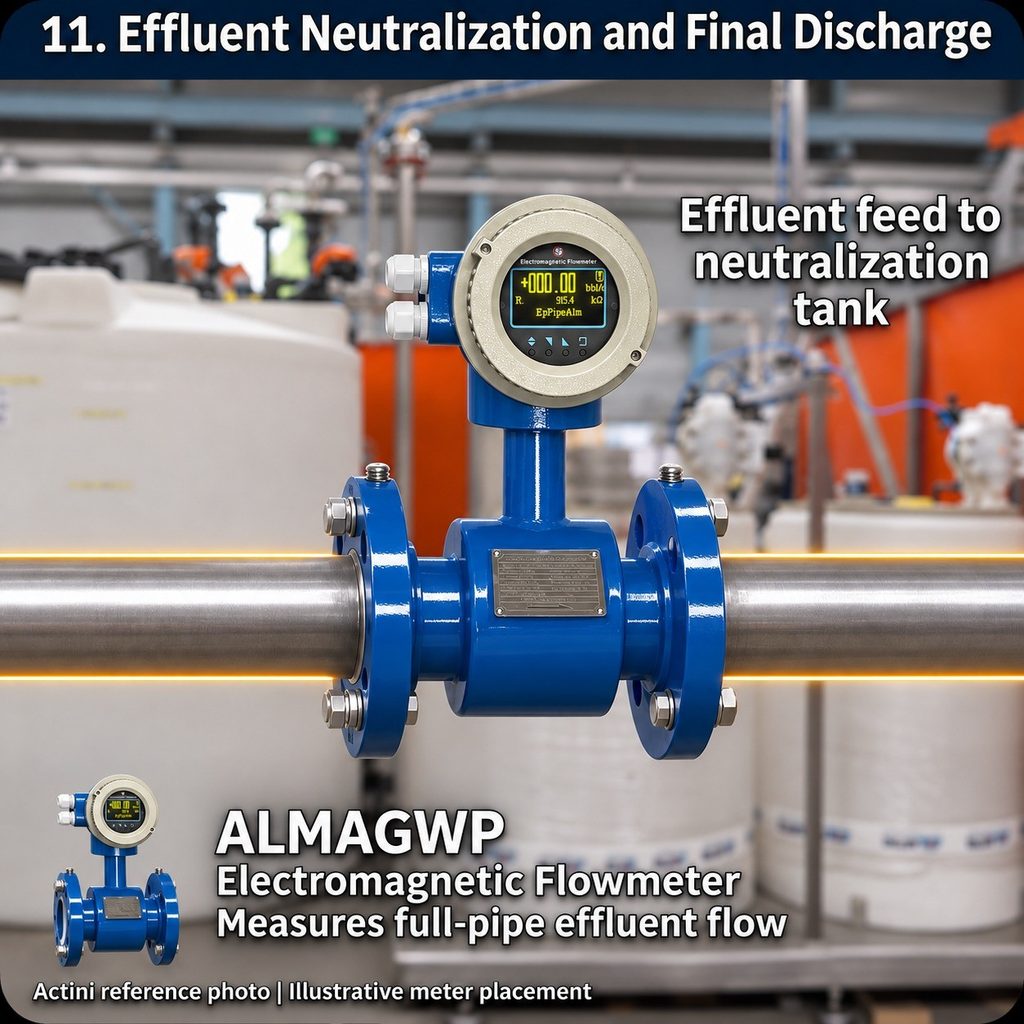
ALMAGWP measures the full-pipe conductive effluent feed to a neutralization tank, and the measured flow serves as an input to the dosing strategy alongside independent pH feedback. Where final discharge is through an open channel, ALSONIC RAVM combines surface velocity and level with the channel geometry to calculate flow.
Steam Cracker Feedstock Transfer
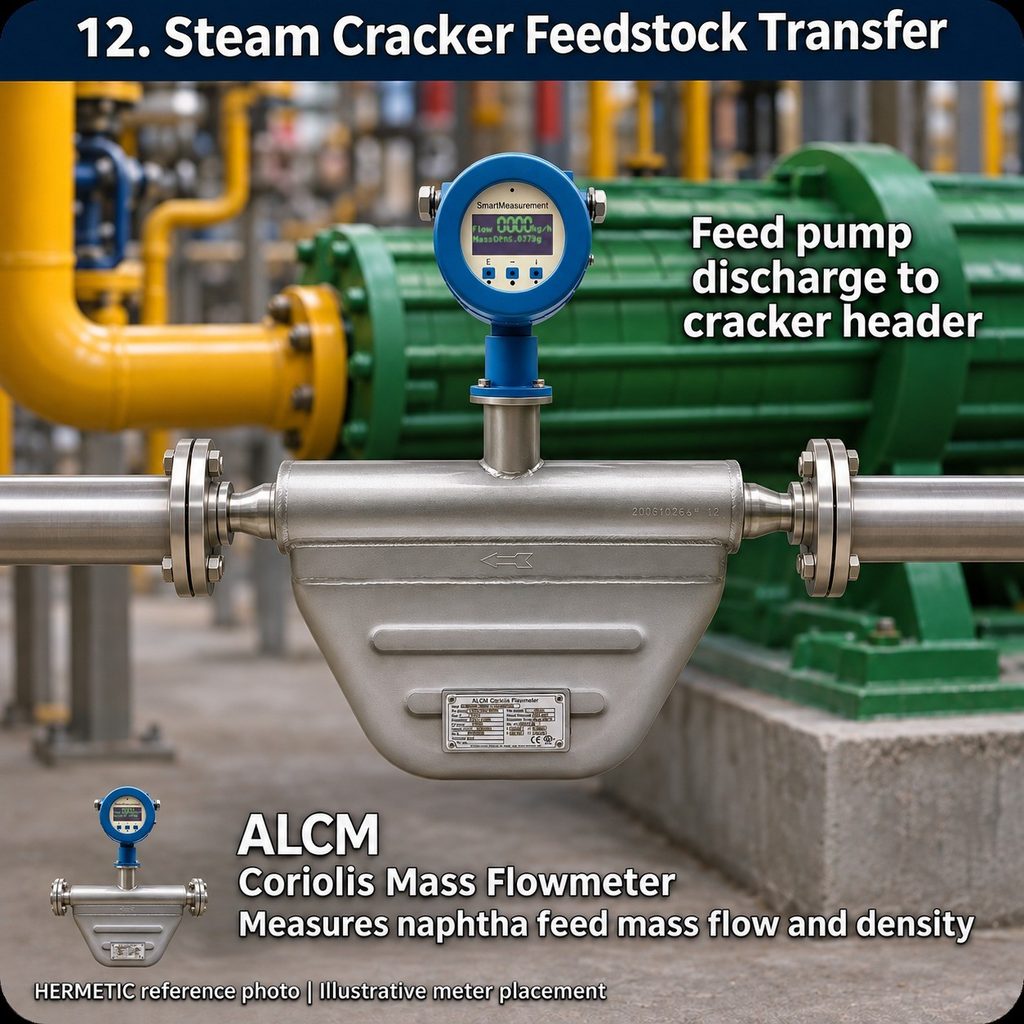
Liquid naphtha is monitored on the feed-pump discharge before the furnace feed split. ALCM measures mass flow and density on a single-phase line where the pressure drop is acceptable, supporting feed accounting and comparison across operating periods. Minimum backpressure and the possibility of flashing at the meter are reviewed during sizing.
Polymer Catalyst and Additive Dosing
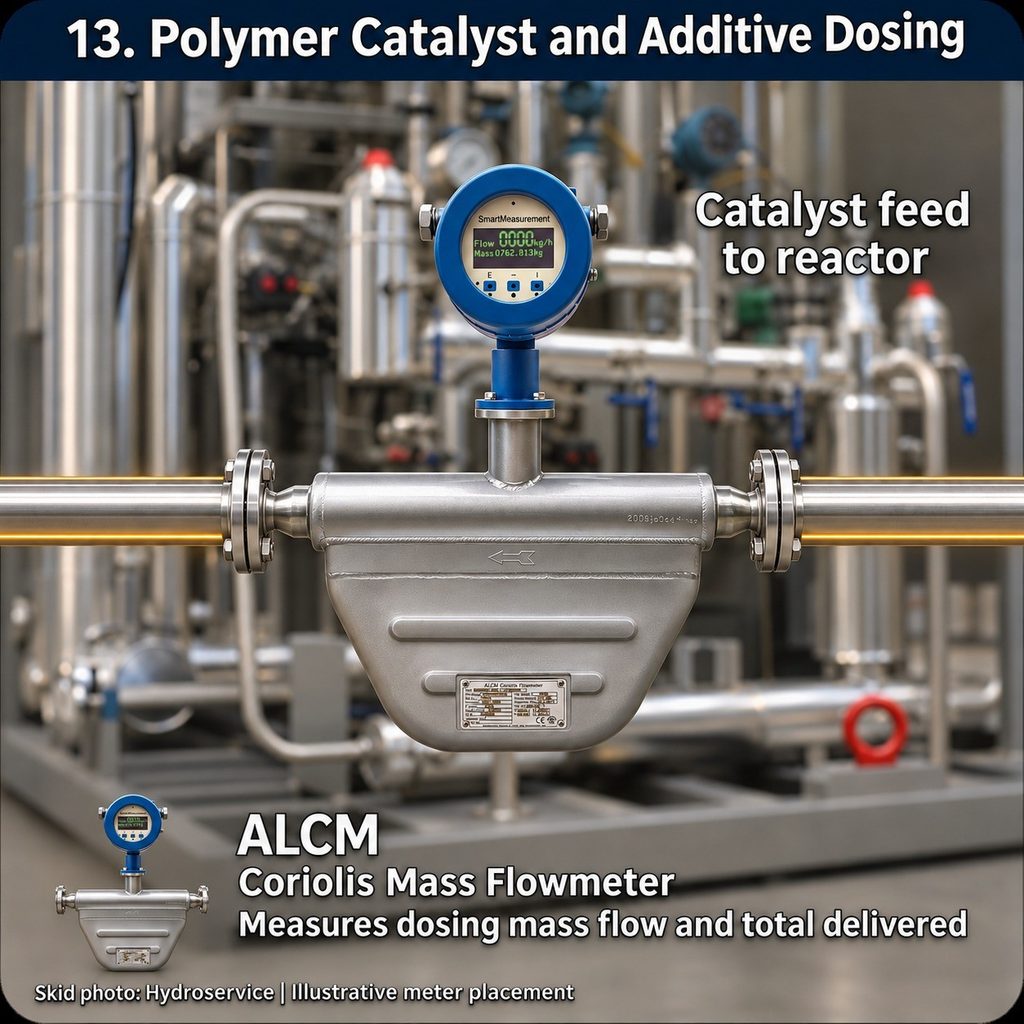
An ALCM sized for the dosing range meters liquid catalyst carrier or additive feed. Minimum flow, pulsation, solids stability and compatibility are reviewed before selection. A validated density correlation can support concentration trending where the carrier and catalyst mixture are well characterized.
Petrochemical Tank Farm and Loading
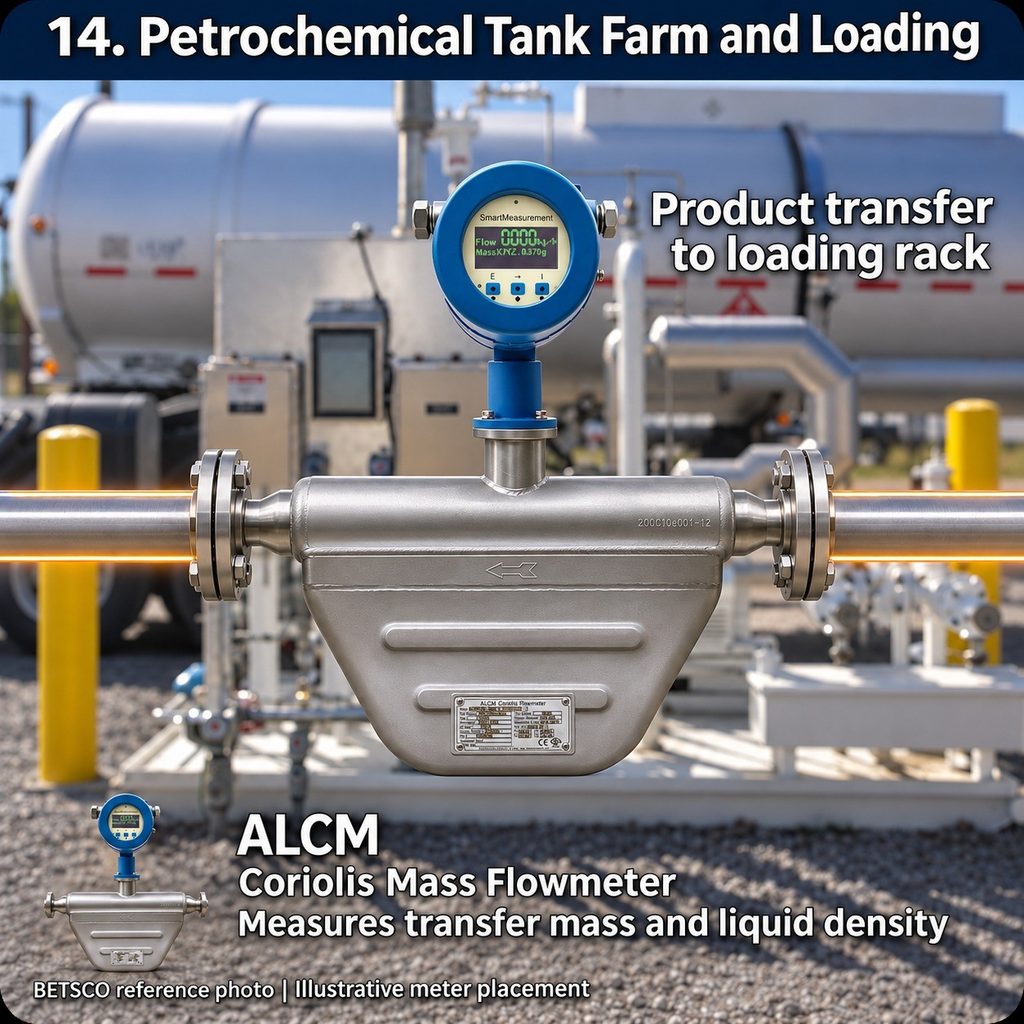
An ALCM on a pumped liquid transfer or loading line totalizes product mass and monitors density during transfers of compatible petrochemical products. Vapor breakout and low-flow performance near the end of a batch are taken into account. For commercial custody transfer, approvals and proving requirements apply to the complete metering system.
Request Application Sizing
Send SmartMeasurement the fluid or gas composition, minimum and maximum flow, line size and material, normal and design conditions, and any required outputs or approvals. For concentration measurement, include the target range and available laboratory reference data.
See all Flow Meter Applications
