Introduction
Water conservation is no longer optional — it is a global necessity. With climate change, population growth, and industrial expansion placing increasing pressure on water resources, industries and municipalities must adopt smarter water management strategies.
One of the most critical tools in modern water conservation initiatives is the flow meter. By enabling accurate monitoring and control of water usage, flow meters help reduce waste, detect leaks, and optimize system efficiency.
At Smart Measurement, we provide advanced flow meter technologies that empower organizations to make data-driven decisions for sustainable water management.
What Are Flow Meters and How Do They Work?
Flow meters are instruments designed to measure the flow rate of liquids, gases, or steam in a pipeline. In water conservation applications, they provide real-time usage data, allowing operators to:
- Track consumption
- Detect inefficiencies
- Identify leaks
- Optimize distribution
Although multiple technologies exist, the most widely used flow meters for water applications include:
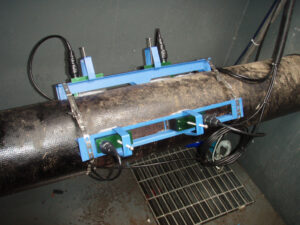
Ultrasonic Flow Meters
Non-invasive and easy to install, ultrasonic flow meters measure water flow using sound waves. They are ideal for:
- Large pipelines
- Retrofit installations
- Municipal water systems
- Irrigation networks
Because they do not require pipe cutting, installation costs are significantly reduced.
Electromagnetic Flow Meters
Electromagnetic (mag) meters are among the most popular technologies for water measurement. They offer:
- High accuracy
- Reliable performance
- Strong global installed base
- Excellent performance in clean and wastewater
They are ideal for conductive liquids such as potable water and wastewater.
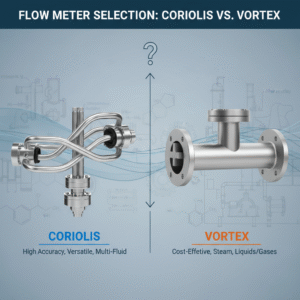
Coriolis Flow Meters
Coriolis meters measure mass flow directly, making them ideal for applications requiring:
- High precision
- No straight pipe runs
- Density measurement
While more commonly used in industrial processes, they are valuable in specialized water applications where accuracy is critical.
Global Water Conservation Challenges
Drought Management
Regions such as California and Australia face prolonged drought conditions. Accurate flow measurement ensures every drop is accounted for.
Urbanization
Rapid urban growth increases water demand. Flow meters improve distribution efficiency and reduce municipal losses.
Industrial Water Consumption
Industries such as manufacturing, agriculture, and energy production are major water consumers. Optimized flow measurement reduces unnecessary waste.
How Flow Meters Improve Water Conservation
Leak Detection
Continuous monitoring helps detect deviations from expected flow rates, enabling early leak identification.
Efficient Resource Allocation
Real-time flow data ensures balanced water distribution across agricultural and municipal systems.
Real-Time Monitoring
Advanced flow meters allow instant adjustments to changing demand conditions, reducing overuse.
Smart Flow Meter Technology and IoT Integration
Modern flow meters now integrate with IoT systems, enabling:
- Remote monitoring
- Cloud-based analytics
- Predictive maintenance
- Automated alerts
Artificial intelligence further enhances predictive analytics by forecasting demand and detecting inefficiencies before they escalate.
Future of Flow Meters in Water Conservation
As smart infrastructure expands globally, flow meters will play a central role in:
- Smart cities
- Sustainable agriculture
- Water recycling systems
- Industrial water optimization
FAQs About Flow Meters and Water Conservation
1. What are the best flow meters for water conservation?
Ultrasonic and electromagnetic flow meters are most commonly used due to accuracy and reliability.
2. How do flow meters detect leaks?
They monitor flow continuously and identify deviations from baseline readings.
3. Can flow meters improve agricultural irrigation?
Yes, they ensure optimal water delivery and prevent over-irrigation.
4. How do smart flow meters work?
They transmit real-time data via IoT systems for remote monitoring and optimization.
5. Why is water conservation important in urban areas?
Growing populations increase water demand, requiring efficient monitoring systems.
Conclusion
Flow meters are essential for modern water conservation strategies. By delivering accurate, real-time data, they enable industries and municipalities to reduce waste and improve sustainability.