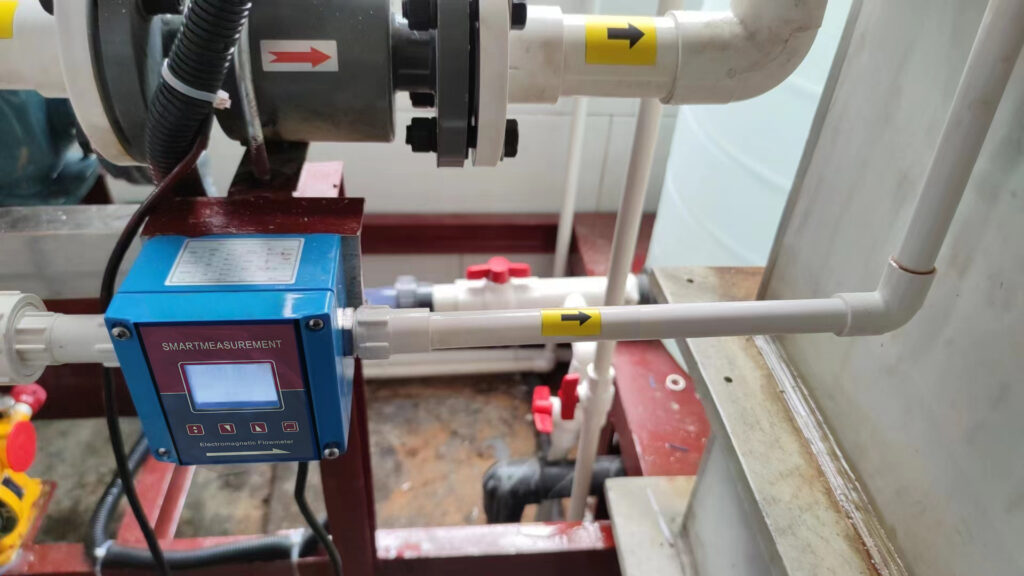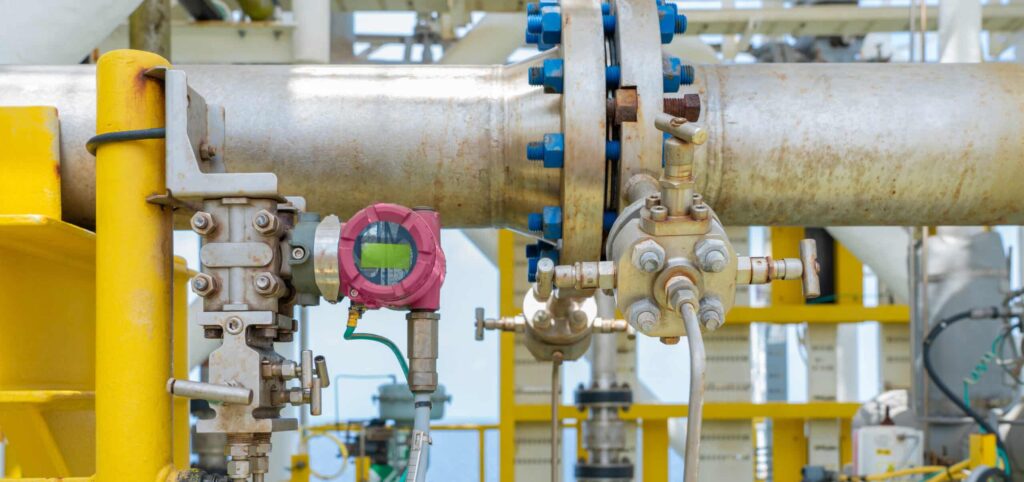
Chemical processing facilities rely on accurate measurement and control to maintain product quality, process stability, operational safety, and production efficiency. From blending raw materials and dosing chemicals to controlling reactor feeds and transferring finished products, flow measurement is essential to everyday industrial operations.
With the development of Industry 4.0, chemical manufacturers are increasingly adopting digital instrumentation, industrial automation, connected sensors, and data-driven monitoring systems. These technologies are changing how flow measurement is performed, giving operators greater visibility into process conditions and helping them make more informed decisions.
Modern flow measurement technologies, including electromagnetic, ultrasonic, and Coriolis flow meters, are playing an important role in this transformation.
What Is Industry 4.0 in Chemical Processing?
Industry 4.0 refers to the integration of digital technologies, automation, connected equipment, and data exchange into industrial manufacturing and processing operations.
In chemical processing, Industry 4.0 can involve integrating measurement instruments with programmable logic controllers (PLCs), distributed control systems (DCS), supervisory control and data acquisition (SCADA) systems, and other industrial monitoring platforms.
These systems help facilities collect and use process information more effectively. Instead of relying entirely on isolated instruments or manual readings, operators can access measurements from different parts of a process through connected control environments.
Flow measurement is particularly important because liquid, gas, and chemical flow rates directly influence many manufacturing operations, including mixing, dosing, reaction control, blending, and material transfer.
Why Accurate Flow Measurement Matters in Chemical Plants
Chemical processing involves the movement and handling of a wide range of fluids, including acids, solvents, water, gases, oils, chemical additives, and other process materials.
Incorrect flow measurements can lead to inaccurate batching, inconsistent product quality, inefficient chemical consumption, and process instability. In certain applications, inadequate monitoring may also create operational or safety concerns.
Reliable industrial flow measurement helps chemical plants:
- Maintain consistent flow rates during production.
- Improve chemical dosing and batching accuracy.
- Monitor material transfer between process stages.
- Support mass balance calculations.
- Identify unexpected flow variations.
- Improve process control and operational visibility.
With Industry 4.0 technologies, measurement data can become more accessible and useful for managing these processes.
How Smart Flow Meters Support Industry 4.0
Modern flow meters can provide measurement data and, depending on the model and configuration, digital communication capabilities that allow integration with industrial automation systems.
These capabilities help chemical plants monitor process conditions and use measurement information to support automated control.
Coriolis Flow Meters for Mass Flow and Process Control
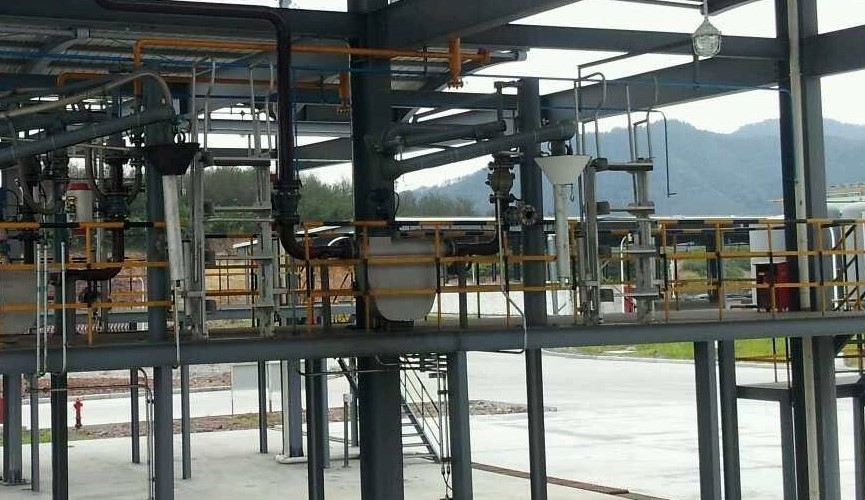
Coriolis flow meters are particularly valuable in chemical processing because they can directly measure mass flow. Depending on the instrument, they may also provide density, temperature, and volumetric flow information.
Mass flow measurement is important in applications where precise material quantities are required, such as chemical blending, additive dosing, batching, and material transfer.
Smart Measurement’s ALCM Coriolis mass flow meter series offers measurement capabilities for applications requiring mass flow and density monitoring. These measurements can help chemical manufacturers monitor material quantities more directly and support more consistent process control.
By integrating Coriolis measurement data into industrial control systems, operators can monitor material movement and make adjustments based on actual process measurements.
Magnetic Flow Meters for Conductive Chemical Liquids
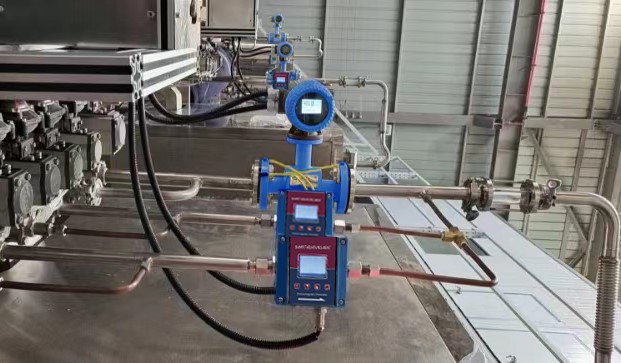
Electromagnetic flow meters are commonly used to measure conductive liquids in chemical processing applications.
They are suitable for various process liquids, including certain acids, alkalis, chemical solutions, and water-based fluids, provided the fluid conductivity, temperature, pressure, and material compatibility meet the instrument’s requirements.
Smart Measurement’s ALMAG electromagnetic flow meters are designed for conductive liquid measurement and applications that include chemical processing and industrial process control.
In automated chemical plants, magnetic flow measurement can help monitor liquid flow rates, support process control, and provide measurement data for connected monitoring systems.
Ultrasonic Flow Meters for Non-Invasive Measurement
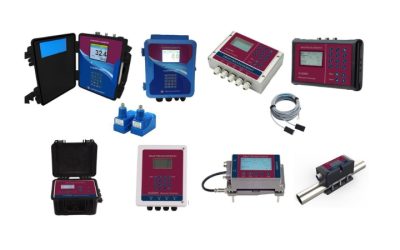
Ultrasonic flow meters offer an alternative for certain liquid flow measurement applications, especially when non-invasive installation is desirable.
Clamp-on ultrasonic flow meters can be installed externally on compatible pipes without cutting the pipeline or interrupting the process for meter installation. This can be particularly useful when monitoring existing systems, evaluating process performance, or measuring flow in locations where intrusive installation is difficult.
Smart Measurement’s ALSONIC ultrasonic flow meters provide measurement options for various industrial liquid applications, depending on the fluid characteristics, pipe conditions, and installation requirements.
Improving Chemical Dosing and Batching Accuracy
Chemical dosing and batching require controlled quantities of materials to be introduced into a process. Small variations in flow rates can influence product composition, reaction conditions, or final product quality.
Industry 4.0 systems can combine flow measurement data with control equipment to support automated dosing and batching operations. Flow meters provide measurements that control systems can use to regulate pumps, valves, and other equipment.
For example, a chemical blending process may require several ingredients to be introduced at specific flow rates or quantities. Measurement instruments can monitor the movement of each ingredient, while the control system manages the process according to programmed parameters.
Coriolis flow meters can be particularly useful when mass-based dosing or measurement is required. Electromagnetic flow meters may be appropriate for conductive liquids, while other measurement technologies can be selected according to the material and process conditions.
Automated dosing systems still require appropriate calibration, control logic, equipment sizing, and process validation to achieve reliable results.
Real-Time Monitoring and Process Visibility
One of the important benefits of Industry 4.0 is improved access to process information.
Connected flow measurement instruments can provide data to centralized monitoring platforms, allowing operators to review flow rates, identify changing operating conditions, and investigate process irregularities.
In chemical plants, this visibility can help monitor:
- Chemical feed rates.
- Liquid transfer between tanks.
- Process circulation and recirculation.
- Cooling water flow.
- Chemical injection systems.
- Batch production operations.
When measurement data is available across different process stages, operators can better understand how individual systems are performing and where further investigation may be necessary.
Real-time monitoring does not automatically resolve process issues, but it can provide the information needed to identify and respond to them more effectively.
Supporting Predictive Maintenance and Equipment Reliability
Industrial flow measurement data may also contribute to equipment maintenance strategies.
Changes in flow patterns can sometimes indicate potential issues involving pumps, valves, pipelines, filters, or other process equipment. For example, an unexpected decrease in flow may warrant investigation for a blockage, pump performance issue, or valve restriction.
When flow measurement data is combined with other relevant process parameters, maintenance teams may be able to identify developing issues and investigate them before they cause more significant disruption.
However, flow measurement alone cannot reliably diagnose every equipment fault. Predictive maintenance strategies require appropriate data analysis, supporting instrumentation, and equipment-specific monitoring methods.
Improving Process Efficiency and Resource Management
Chemical processing facilities often consume significant quantities of water, energy, raw materials, and process chemicals.
Industry 4.0 technologies can help facilities monitor resource consumption and evaluate opportunities for operational improvement. Flow measurement data may be used to assess chemical consumption, monitor water usage, evaluate process circulation, and compare operating performance.
For example, monitoring chemical feed rates can help operators evaluate whether dosing systems are operating within expected parameters. Monitoring cooling water flow may help identify changes in system performance that require investigation.
Accurate measurement supports better operational decisions, but actual improvements depend on how facilities use the information to adjust processes, maintain equipment, and manage resources.
Choosing Flow Measurement Technology for Chemical Applications
Selecting a flow meter for chemical processing requires careful consideration of the fluid and operating conditions.
Important factors include:
- Chemical composition and compatibility with wetted materials.
- Fluid conductivity and viscosity.
- Minimum and maximum flow rates.
- Operating pressure and temperature.
- Pipe diameter and installation conditions.
- Required measurement accuracy.
- Mass flow or volumetric flow requirements.
- Communication and integration requirements.
Coriolis flow meters may be suitable for applications requiring direct mass flow and density measurement. Magnetic flow meters are appropriate for conductive liquids, while ultrasonic flow meters may offer non-invasive options for compatible applications.
The selection process should account for actual process conditions rather than choosing a meter solely because it supports digital communication.
Industry 4.0 is transforming flow measurement in chemical processing by making process data more accessible, supporting automation, and improving operational visibility. Connected flow measurement technologies can help chemical plants monitor material movement, manage dosing operations, improve process control, and support maintenance and resource management strategies.
Coriolis, electromagnetic, and ultrasonic flow meters each offer distinct measurement capabilities that can support different chemical processing applications.
As chemical manufacturers continue to adopt automation and digital monitoring, accurate and dependable flow measurement will remain a critical foundation for more connected and efficient industrial operations.
Smart Measurement offers flow measurement technologies for chemical processing applications, helping plant operators evaluate measurement solutions based on fluid characteristics, operating conditions, and process requirements.